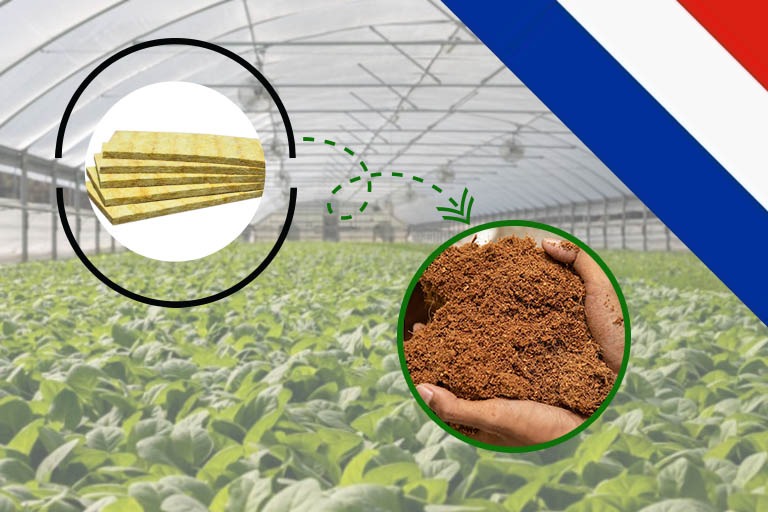
Rockwool to Coco Coir: Why Netherlands Greenhouse Farmers Are Making the Switch
Introduction: Why the Shift from Rockwool to Coco Coir Is Gaining Traction
For years, Rockwool has been the golden standard in commercial greenhouse farming, especially across the Netherlands. But things are changing—and fast. You’ve probably already heard colleagues whispering about Coco Coir. Some call it a trend. Others say it’s the future. So what’s really going on?
Here’s the thing: the shift from Rockwool to Coco Coir isn’t just hype. It’s a reflection of how modern agriculture is evolving—toward sustainability, efficiency, and better long-term yield control.
Let’s unpack what’s causing this quiet revolution inside the greenhouses of Holland and beyond.
What Exactly Is Rockwool—and Why Was It So Popular?
Think of Rockwool like the reliable old tractor of growing media. It’s engineered from basalt rock and chalk, spun into fibrous slabs that provide solid root support and excellent water retention.
For decades, Dutch growers loved Rockwool for its:
- Consistency
- Lightweight nature
- Easy irrigation control
It worked—until the sustainability conversation became louder. Disposing of used Rockwool responsibly is costly and environmentally challenging. And in today’s world, that’s a problem growers can’t ignore.
Coco Coir: The Sustainable Challenger
Now, imagine a growing medium made from something as humble as coconut husks. That’s Coco Coir. And honestly, it’s a game-changer.
Derived from the outer shell of the coconut, coir is renewable, biodegradable, and surprisingly effective at water retention and aeration. Plus, it’s produced in eco-conscious regions like Sri Lanka, where companies like Coco Labs specialize in high-quality grow bags tailored for tomatoes, peppers, and cucumbers.
You know what? Sustainability isn’t just a bonus—it’s becoming the baseline. And Coco Coir checks all the boxes.
Why Growers Are Switching from Rockwool to Coco Coir
You might be thinking, “If Rockwool worked fine, why change?” Fair question. But the answers are stacking up faster than cucumbers in a harvest crate:
- Environmental regulations in Europe are tightening, making Rockwool disposal trickier.
- Coco Coir improves root structure thanks to better oxygenation.
- It’s reusable across short-term crop cycles.
- Transport and import logistics are becoming more favorable for Coco Coir due to global trade partnerships.
And then there’s the emotional side of things—yes, emotions in farming matter. Growers feel better knowing they’re not filling landfills with inorganic slabs.
Rockwool vs Coco Coir: The Showdown (Real Talk, No Bias)
Let’s break it down like you’d explain to your uncle who’s been growing tomatoes since the ’80s:
| Feature | Rockwool | Coco Coir |
|---|---|---|
| Material | Mineral-based | Coconut husk |
| Sustainability | Poor (non-biodegradable) | Excellent (renewable) |
| Reusability | Limited | Good (with care) |
| pH control | Neutral | Slightly acidic, adjustable |
| Disposal | Costly, difficult | Biodegradable, compostable |
See? Coco Coir doesn’t just compete—it often outperforms when you look at the full picture.
Netherlands Greenhouses & the Rise of Coco Coir
Let’s zoom in a bit. Greenhouse farming in the Netherlands isn’t just agriculture—it’s high-tech horticulture. Farmers here are some of the most data-driven and quality-focused growers on Earth.
So when you see Dutch greenhouses switching from Rockwool, it’s not random. They’ve studied the data. They’ve tested the results. And increasingly, they’re investing in Coco Coir systems because:
- They’re reducing carbon footprints without compromising yield
- They’re responding to consumer pressure for greener farming practices
- They’re seeing root health improvements especially in hydroponic tomato and capsicum crops
This isn’t just a trial phase. It’s a shift.
Global Trends: From Canada to Germany—Everyone’s Talking Coco Coir
And it’s not just the Netherlands. Farmers in Canada, Mexico, and Germany are also making the move. Coco Coir is showing up in greenhouse operations from Ontario to Stuttgart.
Why? Because once you understand the lifecycle cost—and compare yield quality—Coco Coir emerges as the smarter long-term investment.
More and more, we hear phrases like:
“We were skeptical at first, but now we won’t go back to Rockwool.”
And with major buyers demanding environmentally conscious produce, sticking with outdated methods could mean falling behind.
How to Transition from Rockwool to Coco Coir Without Losing Sleep
Switching mediums might sound intimidating. It doesn’t have to be.
Here’s a simplified path:
- Test small: Start with one crop cycle using Coco Coir grow bags.
- Monitor closely: Track irrigation timing, EC levels, and pH adjustments.
- Train your team: Make sure staff understand the water-holding difference.
- Choose the right supplier: Not all coir is equal. Go for brands like Coco Labs with reliable quality control.
Need a beginner’s guide? This How to Use Coco Coir Growing Media page walks you through every step.
Questions You Didn’t Know You Had About Coco Coir—Answered
Is Coco Coir sterile?
Mostly. Good suppliers sterilize it during processing. Just ask.
Will it clog my drip irrigation?
Not if it’s properly washed and buffered.
What about salt content?
Premium coir is leached to reduce EC—again, it’s about the supplier.
Does it last?
With careful handling, coir can support multiple crop cycles.
Want to Know More? Here’s Where to Start
Curious about making the switch? Reach out to the experts. Coco Labs offers tailored solutions for commercial growers in Europe, North America, and Latin America.
And if you’re the type who needs hard data (respect), check the research from the Coconut Research Institute of Sri Lanka. You’ll find the science is right behind the sustainability.