Vertical farming has become more than a buzzword—it’s a genuine solution to urban food supply challenges. And right at the center of this shift are grow bags for vertical farming. Farmers in the Netherlands, Canada, Mexico, the USA, and Germany are already seeing how coco coir grow bags can make greenhouse production cleaner, more consistent, and surprisingly more affordable.
Why grow bags stand out in vertical systems
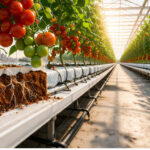
Here’s the thing: space in vertical farms is limited, and every square meter counts. Coco coir grow bags provide a lightweight yet durable growing medium that fits neatly into rack systems. Unlike heavy soil trays, these bags don’t compact, which means better root aeration. And when roots can breathe, plants like lettuce and radishes thrive without unnecessary stress.
It’s also worth mentioning the sustainability angle. Coir is a natural fiber from coconut husks, and researchers at the Coconut Research Institute Sri Lanka have long emphasized its role in eco-friendly agriculture. Unlike peat moss, it’s renewable and doesn’t strip ecosystems bare.
Lettuce, radishes, and beyond
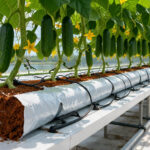
People often think of vertical farms as lettuce-only setups. Sure, leafy greens dominate the headlines, but radishes, cucumbers, and even cherry tomatoes adapt well to coco coir bags. Imagine growing crisp lettuce on one shelf and peppery radishes on the next—it’s like running a miniature farmers’ market inside your greenhouse.
For practical tips on setup, you can check how to use coco coir grow bags where the process is broken down step by step.
The hidden benefit: consistency
Ask any grower—consistency is everything. Plants grown in coir bags receive water and nutrients evenly because the substrate distributes moisture without drowning roots. That uniformity is what allows vertical farmers to plan yields with confidence.
Fun fact: coir’s natural capillary action means water can rise upwards inside the bag, almost like how a paper towel pulls water when you dip the corner in. It’s small details like this that keep plants from wilting.
What about long-term costs?
Sure, some farmers worry that switching systems will be expensive. But here’s a twist: grow bags reduce the need for pesticides and soil treatments, trimming costs over time. And since they’re easy to handle, labor efficiency improves too. Many large-scale greenhouses in Canada and Germany report that setup and replacement cycles are simpler compared to traditional soil trays.
Want to see how companies are applying this at scale? Coco Labs shares insights into global practices with coir substrates.
FAQs about grow bags and vertical farming
1. Can I reuse grow bags for vertical farming?
Yes, with proper cleaning and sterilization, coco coir grow bags can be reused for multiple cycles depending on the crop.
2. Are grow bags suitable for hydroponic vertical systems?
Absolutely. They work seamlessly with drip irrigation and hydroponic setups since coir retains moisture without waterlogging.
3. What crops grow best in coco coir bags?
Lettuce, radishes, tomatoes, cucumbers, and capsicum are the most common. Some herbs also adapt well.
4. How do grow bags compare to rockwool?
Coir bags are renewable and biodegradable, unlike rockwool, which can pose disposal challenges.
5. Do coir bags need fertilizers?
Yes. While coir supports root development, it’s inert—so balanced nutrient solutions are necessary for strong yields.