If you’ve been evaluating reusable grow bags for 3–5 growing seasons, you already know the decision isn’t just about saving money. It’s about predictability, plant stamina, and whether the substrate still behaves the same way in season three as it did in season one. Many greenhouse producers—especially in the Netherlands, Canada, the USA, Mexico, and Germany—are having the same conversation right now. Some are shifting to reusable systems because consistent coco coir formulations make it possible, while others remain cautious because older substrates can lose structure over time.
Let me explain how the newer generation of coir grow bags, including the ones produced in Sri Lanka by companies like Coco Labs, stay stable through multiple rotations. Coir isn’t just a random fiber; it has a rich scientific background, and even agricultural institutions like the Coconut Research Institute of Sri Lanka have documented its durability and structural resilience over repeated wet–dry cycles.
Why Reusable Grow Bags Are Becoming a Serious Option
There was a time when growers avoided reusing bags because they collapsed or compacted in the second season. But improved processing—better buffering, tighter compression ratios, and well-balanced pith–fiber blends—changed everything. Now, certain substrates hold their form through three, four, or even five seasons.
You know what? The appeal goes beyond cost savings. Reusable bags create workflow consistency. Workers get used to the same channel width, the same expansion behavior, and the same irrigation rhythm year after year. That alone reduces mistakes.
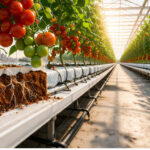
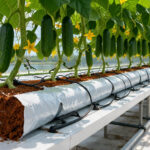
Greenhouse tomatoes, capsicum, and cucumbers respond particularly well to coir’s natural air–water ratio, which doesn’t shift too dramatically when the substrate is prepared properly. This kind of stability is exactly what global suppliers from Sri Lanka emphasize on their technical pages, including resources like the Coco Labs grow bag guide.
What Actually Determines Whether a Grow Bag Lasts 3–5 Seasons?
Let’s pull back the curtain on the real factors—because it’s not magic, and it’s not marketing.
1. Fiber Quality and Freshness
Coir harvested from younger husks maintains a stronger natural lignin structure. Old husk breaks down quickly and won’t last.
2. Buffering Quality
The calcium-potassium exchange determines long-term performance. If the buffering is inconsistent, the substrate weakens by season two.
3. Bag Thickness and UV Stability
Greenhouse films and plastics sit under sun, humidity, and constant nutrient exposure. Thin bags degrade fast. Thicker, UV-treated polyethylene lasts much longer.
4. Drainage Structure
Multi-season bags must drain consistently, otherwise roots get trapped in wet pockets after season one.
5. Crop Rotation Method
Some crops—like cucumbers—leave behind more root mass, requiring deeper cleaning before reuse.
Good suppliers publish these specs publicly. If you check the main pages of Sri Lankan exporters like Coco Labs, you’ll see consistency in how they explain fiber grading and pith ratios.
Common Misunderstandings About Reusing Coir Bags
You may hear growers say reusable bags “weaken,” “compact,” or “lose air.” Sometimes they’re right—but usually it’s because the original substrate wasn’t formulated for multi-season use. Not all coir is equal. Some mixes rely on high-pith compositions meant for annual use only.
Another misunderstanding is the idea that reusable bags are hard to clean. Sure, it takes a bit of effort—removing roots, clearing top residue—but greenhouse teams quickly build a routine. With vertical stacking and mechanical shakers, the process becomes surprisingly fast.
How Reusable Bags Affect Tomato, Cucumber, and Capsicum Yields
Most growers switching to 3–5 year systems report:
- More stable early-season root growth
- Better mid-season nutrient uptake because the substrate settles into a predictable structure
- Lower irrigation errors since moisture distribution becomes familiar
- Higher ROI after the second year
Tomatoes tend to show the clearest improvement because they appreciate stable, slightly aged coir in year two.
Capsicum tends to respond more sensitively to EC variations, so multi-season bags work best when the initial substrate is washed with fresh water and buffered carefully. Sources like the Coir Wikipedia page provide insight into how coir’s physical properties withstand decomposition cycles, which is partly why it survives multiple seasons without collapsing.
Life Cycle of a Reusable Grow Bag (3–5 Seasons)
———————————————————
SEASON 1:
Highest air porosity
Fast root penetration
Requires careful initial irrigation
SEASON 2:
Structure settles slightly
EC stabilizes quicker
Ideal for tomatoes and cucumbers
SEASON 3:
Fiber matures and becomes more uniform
Drainage slows slightly but stays predictable
SEASON 4–5:
Best for controlled greenhouses
Works well with automated fertigation
Requires pre-season flushing and cleaning
———————————————————
It’s fascinating how natural fibers behave over time—almost like they “learn” your greenhouse rhythm.
When Should You Avoid Reusing Grow Bags?
There are a few scenarios where reusing isn’t a great idea:
- If the first-season crop had fungal infections
- If the coir was unbuffered or poorly washed
- If you’re cultivating highly sensitive varieties
- If greenhouse humidity exceeds tolerances and the bag film degrades
- If the supplier can’t provide proof of multi-season durability
But when conditions are right, reusing makes greenhouse operations smoother.
FAQ Section
1. Can all coco coir grow bags be reused for 3–5 seasons?
No—only those designed with high-fiber content, proper buffering, and durable film.
2. Do reusable grow bags change water uptake in later seasons?
Yes, slightly. They tend to retain moisture better, which can help with tomatoes and cucumbers.
3. How should grow bags be cleaned between seasons?
Remove old roots, flush with clean water, check bag integrity, and reset drippers.
4. Are reusable grow bags safe for greenhouse peppers?
Absolutely, as long as the substrate remains within EC and pH tolerances.
5. What makes Sri Lankan reusable coir bags popular globally?
Quality fiber, consistent washing methods, and strong export infrastructure.