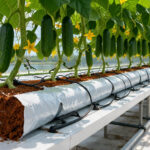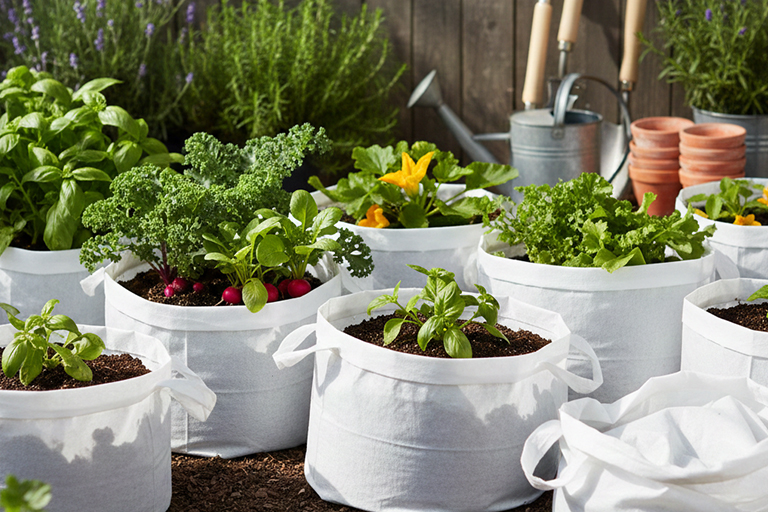
Grow bags are reusable? the short answer is YES, and for commercial greenhouse growers, that reality quietly reshapes production planning. Tomatoes, capsicum, and cucumbers don’t care whether the substrate is new or reused. What they respond to is balance—air, water, nutrients, and consistency over time.
If you’ve spent any time managing a greenhouse crop, you already know this: stability beats novelty. Reuse works when the system respects how coco coir behaves, not when it’s treated like disposable packaging.
Let me explain why reuse keeps gaining ground globally, especially in regions like the Netherlands, Canada, Mexico, the USA, and Germany.
The material itself sets the rules
Coco coir isn’t fragile. That’s the first misconception. It’s fibrous, elastic, and slow to break down. Those fibers come from coconut husks, processed and buffered to form structured growing media. If you want the technical background, this overview of Coir explains why the material resists collapse better than many alternatives.
That structural resilience is the foundation of reuse. Without it, none of the rest would matter.
And here’s the quiet truth: growers didn’t decide to reuse grow bags out of environmental sentiment. They did it because the substrate kept performing.
Why root-zone stability matters more than freshness
Fresh substrate looks clean. It smells neutral. But plants don’t care about appearance. They care about pore space, oxygen movement, and predictable moisture curves.
In reused grow bags, coco coir retains its internal channels. Roots from the previous crop leave behind micro-pathways that actually help water and air move evenly. That sounds counterintuitive at first. But many growers notice smoother irrigation response in the second cycle.
That’s one reason grow bags are reusable without triggering yield loss.
Reuse doesn’t mean skipping sanitation
Let’s be clear. Reuse is not neglect.
Commercial growers flush old salts, remove root mass, and rebalance EC levels before planting again. That reset process doesn’t need extreme measures; it needs discipline.
What usually happens:
- Old plants are removed carefully
- Root remnants are cleared
- Bags are flushed with clean water
- EC and pH are checked before transplant
That’s it. No magic. No shortcuts.
Institutions such as the Coconut Research Institute Sri Lanka have long supported proper handling of coir substrates across multiple agricultural uses, reinforcing that reuse works when fundamentals are respected.
Cost pressure is real, and reuse answers it
Greenhouse production isn’t getting cheaper. Energy, labor, logistics—everything trends upward. Substrate reuse spreads cost across seasons instead of resetting budgets every cycle.
For large tomato or capsicum operations, that shift alone can change annual projections.
Growers working with suppliers like Coco Labs often plan reuse before the first transplant. That mindset changes how irrigation layouts, drainage collection, and crop scheduling are designed from the start.
Reuse stops being reactive. It becomes intentional.
Yield consistency beats theoretical perfection
Some growers worry reused bags might introduce variability. In practice, it’s often the opposite.
Fresh substrates can behave unpredictably early on—initial wetting, uneven EC zones, or inconsistent drainage. Reused coir is already “settled.” It responds faster to irrigation adjustments and stabilizes quicker after transplant shock.
You know what? Many high-performing greenhouses actually prefer second-cycle coir for long-season tomatoes.
If you’re new to managing coir systems, this guide on Grow Bags walks through setup and handling in plain terms, without pretending every greenhouse is identical.
Disease risk gets talked about more than it appears
Yes, pathogens exist. But they don’t appear just because a grow bag is reused.
Disease pressure rises when:
- Drainage is poor
- EC levels drift too high
- Roots stay saturated for too long
Those conditions affect new substrates just as easily.
Well-managed reuse keeps moisture moving, oxygen present, and root zones balanced. That’s what suppresses disease pressure, not the age of the substrate.
Environmental gains are a side effect, not the driver
Reuse reduces waste. That’s obvious. Fewer bags discarded, fewer shipments ordered, less material handled.
But here’s the nuance: growers didn’t adopt reuse to be virtuous. They adopted it because it fit their workflow. The environmental benefit came along for the ride.
And frankly, that’s why it sticks.
A quick mental reset about “used” substrates
“Used” sounds worn out. Coco coir doesn’t behave that way.
Think of it like a well-seasoned cast iron pan. The structure improves with care. The performance stabilizes. Problems only appear when maintenance is ignored.
That analogy sticks because it’s accurate.
Where reuse makes the most sense
Reuse performs best when:
- Drainage systems are consistent
- Irrigation is monitored, not guessed
- EC is measured regularly
- Crops are similar across cycles
Tomatoes, capsicum, and cucumbers fit that profile well. They’re predictable feeders when conditions stay steady.
FAQs
How many times can coco grow bags be reused?
Most commercial growers reuse them for two to three cycles, depending on crop duration and irrigation quality.
Does reuse affect tomato yield negatively?
No. Yield remains stable when EC and moisture are controlled properly.
Is reuse safe for capsicum and cucumber crops?
Yes. These crops respond well to stable root environments, which reused coir provides.
Do reused grow bags need chemical treatment?
Usually no. Flushing and monitoring are sufficient in most systems.
Is reuse common in European greenhouses?
Very common, especially in high-density tomato production.