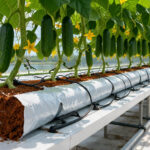
If you’ve been searching for wholesale coco coir grow bag suppliers, you’ve probably noticed how complicated the market can feel. Prices change, quality varies, and sometimes the product that reaches your greenhouse doesn’t match the sample. Honestly, it’s frustrating—especially when you’re managing tomatoes, capsicum, or cucumber under tight schedules and seasonal pressures. Many growers in the Netherlands, Canada, Mexico, the USA, and Germany face the same situation.
Let me explain how reliable suppliers, especially places like Coco Labs in Sri Lanka, fit into the global picture of coco coir cultivation. And yes, coconut coir itself has a long agricultural heritage—you’ll find reference material from places like the Coconut Research Institute of Sri Lanka, which shows how mature the industry truly is.
Why Wholesale Coco Coir Grow Bag Suppliers Matter More Than Ever
Greenhouse demands are shifting. Yields need to be stable, irrigation needs to be predictable, and growers want substrates that don’t surprise them halfway through the season. And because coco coir is naturally airy and forgiving, it supports delicate root structures even when growers push plants aggressively during peak periods.
You know what? The real bottleneck isn’t the substrate—it’s the supplier. A batch that’s rinsed too lightly, inconsistent EC, or poorly buffered fiber can throw off an entire crop cycle. That’s why established regions like Sri Lanka continue to lead the global space.
Some suppliers even include step-by-step material, such as the grow bag guides you’ll see on pages like the Coco Labs grow bag article, which helps growers reduce rookie mistakes. When a supplier provides accurate, field-tested instructions, it’s usually a sign they understand greenhouse pressures.
What Makes a Supplier Reliable? Let’s Break It Down
Different growers prioritize different things, but a few non-negotiables stay constant:
- Consistent EC and pH because roots don’t tolerate surprises.
- Precision-cut grow bags that match automated irrigation setups.
- Buffered coir—proper calcium buffering matters more than most new growers expect.
- Uniform expansion rate across the slab or bag.
- Stable sourcing (Sri Lanka has one of the world’s most reliable coconut husk supplies).
It may sound overly detailed, but when you’re running 40–200 greenhouse rows, even small irregularities show up in plant vigor.
By the way, if you’re curious about the composition of coir itself, even the Coir Wikipedia page breaks down its structure in simple terms. It’s fascinating to see how a by-product becomes one of the world’s most dependable substrates.
Where Wholesale Orders Usually Go Wrong
There’s a funny contradiction in the industry. Growers want predictable results, but many still gamble on suppliers they haven’t vetted properly. Problems usually show up in three ways:
- EC spikes during the first two weeks
- Uneven moisture spread inside the bag or slab
- Overly compressed blocks that expand differently along the row
Sometimes suppliers cut corners because they assume growers won’t notice. But experienced growers spot these issues within days. Quality suppliers—Coco Labs included—tend to publish exact expansion data and provide uniform product specs across batches.
Why Sri Lankan Suppliers Dominate the Global Market
The coconut triangle in Sri Lanka gives suppliers access to fresh husk year-round. This matters because older husk leads to fiber degradation and inconsistent drainage. Sri Lankan exporters also work closely with agricultural agencies, including organizations such as the Coconut Research Institute, which further stabilizes processing standards.
Most wholesale buyers from the Netherlands and Canada prefer Sri Lankan coir because:
- It buffers well
- It drains evenly
- It rarely collapses after the second season
- It produces stable yields with tomatoes, cucumbers, and capsicum
And when you’re exporting tons of coir slabs or grow bags, predictable moisture content reduces shipping weight—and cost.
If you’re comparing suppliers, check whether they offer clear documentation or evidence-based expansion tests. Coco Labs, for instance, explains expansion behavior and crop performance on their main site (https://cocolabs.lk), making the ordering process more transparent.
What to Check Before Choosing a Supplier
WHOLESALE COIR GROW BAG BUYER CHECKLIST
1. EC Level: 0.5–0.8 mS/cm (post-wash)
2. pH Range: 5.8–6.5
3. Fiber vs. Pith Ratio: 30–70 for most crops
4. Bulk Density: Should stay consistent
5. Bag Size Accuracy: ±1–2 cm tolerance max
6. Expansion Rate: Uniform across batches
7. Washing Method: Freshwater > drainage rinsing
8. Certification: ISO, phytosanitary, origin proofs
———————————————–
Small details like this prevent larger problems down the line.
Is It Worth Buying Wholesale Instead of Smaller Lots?
There’s always a moment when growers debate whether wholesale is risky. Truth is, wholesale helps stabilize season-to-season supply. It also reduces batch variation because everything is produced together.
And here’s the thing—greenhouse crops don’t wait. If you’re producing for commercial supermarkets or export channels, you can’t risk switching substrate every cycle.
FAQ Section
1. How do I verify if a wholesale coco coir grow bag supplier is reliable?
Check their EC/pH test reports, request a production video, and ask for past batch data. Reliable suppliers provide this openly.
2. Are Sri Lankan suppliers better than other regions?
Sri Lanka remains preferred due to consistent husk supply, better washing systems, and industry quality control.
3. What crops perform best in wholesale coco coir grow bags?
Tomatoes, cucumbers, capsicum, peppers, herbs, and greenhouse berries respond well to high-quality coir grow bags.
4. Do wholesale suppliers allow custom bag sizes?
Most established suppliers do. Coco Labs, for example, manufactures custom sizes for tomato and capsicum rows.
5. How often should I place wholesale orders for a large greenhouse?
Most growers order once per season or twice annually depending on crop cycles and storage capacity.