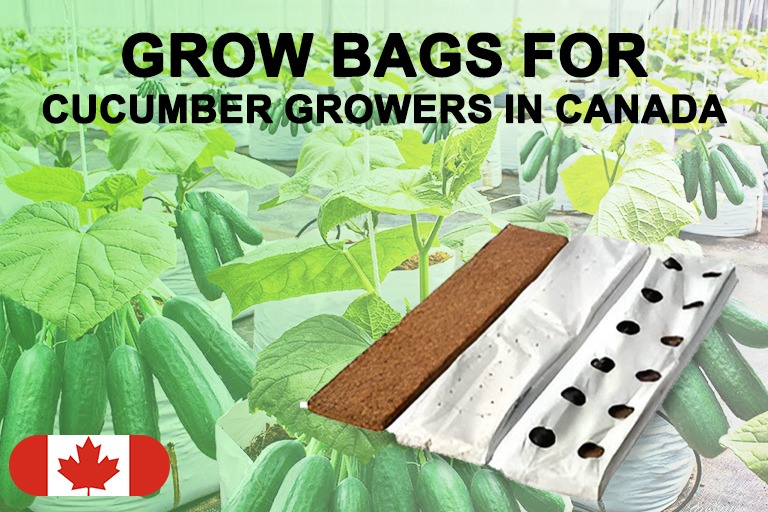
Picture a greenhouse in southern Ontario or British Columbia where crisp, flavorful cucumbers climb robust vines in neat grow bags. If you’re aiming for harvest consistency and strong plants — especially in cooler climates like Canada — this post is right up your alley.
Why the substrate you choose shapes success for cucumber growers in Canada
Cucumbers need the right balance: moisture without drowning, air without drying out. That’s where grow bags filled with coco coir shine effortlessly. They wick moisture, offer steady drainage, and remain breathable. Particularly useful in Canadian settings with variable humidity and temperature swings.
How grow bags for cucumber growers in Canada deliver results
When people talk about grow bags for cucumber growers in Canada, what they usually mean is premium coco coir-based containers designed for just the needs of the crop. Brands like CoirMedia and local suppliers tailor bags that marry coconut fiber and husk chips to hit precise moisture and air ratios.
These grow bags are uniquely suited for greenhouse or controlled setups. They come with cut-outs for seedlings and pre-set drainage — perfect for small farms or urban greenhouse growers.
Breaking down substrate options: which is best for cucumbers in Canada
Coco coir grow bags
They offer long-lasting strength, excellent aeration, and moisture control. Reusable if rinsed and sterilized, biodegradable afterward, and very lightweight — ideal where shifting trays indoors is often needed
Coco-husk chip blends
These mixes enhance air-filled porosity — great for cooler Canadian springs when roots need oxygen and not soggy conditions.
Alternatives like perlite or rockwool
Perlite adds rock-like drainage but holds little water — often used alongside coir. Rockwool may deliver industrial standard results, but it’s heavier, pH-sensitive, and irritant to handle.
Practical tips Canadian growers swear by
You know what? It doesn’t need rocket science, but details matter. Here are a few essentials:
- Choose at least a 15-gallon bag (≈57 L) for single cucumber plants — gives roots space to stretch without stress.
- Mix coir with husk chips or perlite to boost porosity and avoid compaction.
- Flush and leach coir well to remove salts; add lime if pH runs high. Sri Lankan coir often needs that step.
- Install a drip fertigation system with EC and pH monitoring — cucumbers in grow bags respond quickly to feed rate shifts.
- Trellis support is a must — even a simple tomato cage does the job.
FAQs readers often ask (and snippets love)
What size grow bag is ideal for cucumbers?
A minimum of 15 gallons (~57 L) per plant prevents shallow roots and reduces tipping risk.
Can Canadian growers reuse coco coir grow bags?
Yes. With proper rinsing, sterilizing, and pH correction, coir bags can serve multiple seasons. After use, compost breakdown is eco‑friendly cocolabs.lk.
Do grow bags work better than containers or raised beds?
Often, yes. Grow bags enhance aeration, reduce overwatering, and adapt easily in confined greenhouse rows or balconies.
Digression: a nod to coco growers in Sri Lanka
Here’s a little tangent—did you know Sri Lanka’s Coconut Research Institute has fine-tuned coir quality standards that influence suppliers globally? That’s part of why growers in Canada and Europe rely on Sri Lankan-grade coir—consistent quality, low salts, and sustainability credentials. And guess what? Coco Labs hails from Sri Lanka too, with access to that expertise and quality sourcing.
Grow bags for cucumber growers in Canada bring together the best of substrate engineering and practical gardening. They’re lightweight, breathable, moisture-regulating, and adaptable. When paired with proper nutrient management, trellis systems, and climate control, they support top-tier harvests.
If you’re curious about bag sizes, climate-specific formulations, or want to explore our range at Coco Labs — check out our grow bag guide: Grow Bags or head over to our home page: Coco Labs.