Low-EC coco coir bags rarely get the spotlight they deserve. Most growers focus on fertigation recipes, climate curves, or lighting strategies. Yet when electrical conductivity creeps up inside the root zone, even the best plans start wobbling.
Here’s the uncomfortable truth: many crop problems blamed on nutrition or climate actually begin with substrate EC. And once EC rises inside grow bags, plants quietly struggle long before symptoms show.
Let’s talk honestly about why low EC matters, how coco coir behaves differently, and why growers across the Netherlands, Canada, Mexico, the USA, and Germany pay close attention to this detail.
EC isn’t just a number on a screen
EC measures dissolved salts. But in real crops, it represents resistance. The higher the EC, the harder roots must work to pull in water and nutrients.
Plants don’t complain loudly at first. Growth slows slightly. Calcium uptake weakens. Fruit quality becomes inconsistent. By the time visual symptoms appear, the root zone has been under stress for weeks.
That’s why starting with low-EC coco coir bags sets a calmer baseline for the entire crop cycle.
Why low-EC coco coir bags protect root function under pressure
Roots operate best when water moves easily. Low EC keeps osmotic pressure manageable, allowing roots to absorb moisture without strain.
Coco coir naturally supports this because it drains excess salts efficiently when irrigation is dialed in correctly. But only if the starting EC is genuinely low.
This is where quality processing matters. Proper washing and buffering remove excess sodium and potassium before planting ever begins.
For background on the raw material itself, this explanation of Coir helps clarify why coco fibers respond so well to flushing and rebalancing.
Tomatoes, capsicum, and cucumber respond differently—but EC affects them all
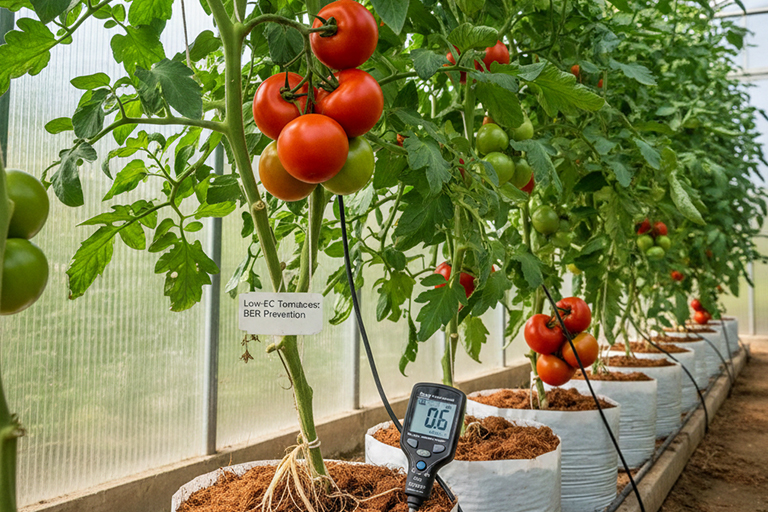
Tomatoes are often the first to show stress through blossom end rot or uneven fruit sizing. Capsicum may hold color but drop flowers. Cucumbers might shorten internodes and reduce fruit length.
Different symptoms. Same root cause.
Low EC keeps nutrient flow predictable across all three crops, especially during peak transpiration periods when demand spikes.
Starting low gives growers more room to adjust
Here’s something experienced growers appreciate: flexibility.
When substrate EC starts low, you can increase feed strength gradually as the crop demands more. When EC starts high, you’re already on the defensive—flushing, diluting, correcting.
That reactive mode increases labor and stress. Low-EC substrates reduce the need for emergency decisions.
Suppliers like Coco Labs focus heavily on pre-treatment and quality control because once coir enters the greenhouse, correcting high EC becomes far more expensive.
Drainage works better when EC is controlled
Drainage percentage matters, but drainage alone can’t compensate for high starting EC. Excess salts linger in pockets, especially if irrigation distribution isn’t perfectly uniform.
Low EC improves the effectiveness of normal drainage practices. Salts exit the root zone more efficiently, rather than accumulating silently over time.
This matters even more in reused grow bag systems, where previous crop residues can amplify EC if not managed carefully.
If you’re reviewing setup fundamentals or training staff, this guide on Grow Bags explains drainage and flushing logic in a way that connects theory with daily greenhouse routines.
Climate stress amplifies EC problems
High light, warm temperatures, and low humidity increase transpiration. When EC is high, plants struggle to keep up with water demand under those conditions.
Low-EC coco coir bags reduce that friction. Water moves more freely. Calcium and other immobile nutrients travel more consistently. Fruit tissues develop with fewer interruptions.
This doesn’t eliminate climate stress—but it prevents EC from making it worse.
Reuse becomes safer with low EC
Growers often hesitate to reuse grow bags due to salt buildup concerns. That concern is valid—when EC isn’t managed.
Starting with low EC gives reuse a much better chance of success. Flushing between cycles becomes effective rather than corrective. Root zones reset faster. Crops start clean.
That’s why many commercial greenhouses treat low EC as a prerequisite for reuse, not a bonus.
A quiet influence on fruit quality
EC affects more than yield. It influences:
- Fruit firmness
- Shelf life
- Uniformity across harvests
When EC remains moderate, fruit develops steadily instead of under stress. That consistency reduces rejection rates downstream.
Retail buyers may never ask about EC. But they react quickly to inconsistent product.
Not all “low EC” claims are equal
Here’s where experience matters. Some substrates test low initially but spike after the first few irrigation cycles due to residual salts or uneven buffering.
True low-EC coco coir maintains stability over time. That stability shows up in predictable runoff readings week after week.
Growers learn quickly which materials behave honestly—and which don’t.
A practical mindset shift
Low EC isn’t about pushing crops harder. It’s about removing unnecessary resistance.
Think of it like driving with the parking brake slightly engaged. You can still move forward, but everything works harder than it should. Low EC releases that brake.
FAQs
What does low EC mean in coco coir bags?
It means minimal dissolved salts, allowing easier water and nutrient uptake.
Why is low EC important for tomatoes?
It supports calcium movement and reduces stress-related disorders.
Can low EC improve capsicum flower retention?
Yes. Stable water uptake supports reproductive development.
Does low EC help with grow bag reuse?
Yes. It makes flushing and EC reset more effective between cycles.
How do growers monitor EC in grow bags?
By measuring runoff EC regularly, not just feed solution.