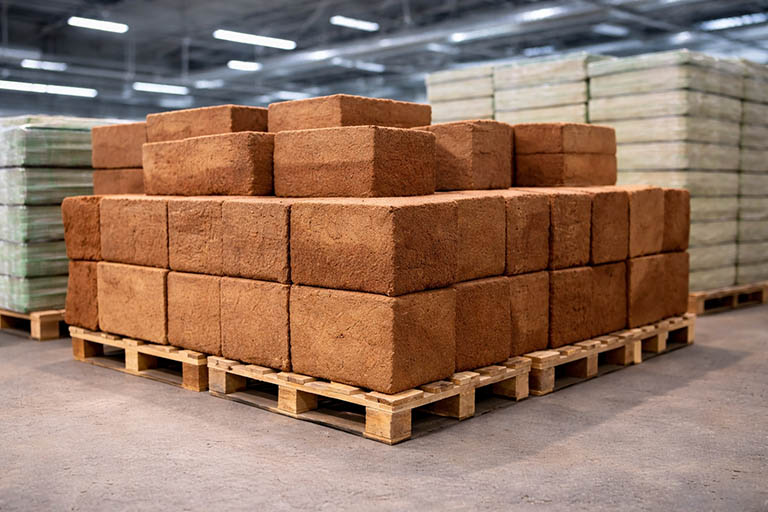
5 Strategic Reasons to Choose a Coco Coir Substrate Supplier for Greenhouse Farmers in California
Selecting the right Coco Coir Substrate Supplier for Greenhouse Farmers in California is not a routine purchasing decision. It is a production strategy.
California greenhouse agriculture operates under unique pressure. Water regulation is strict. Labor costs are high. Market expectations are unforgiving. According to official state agricultural data published by the California Department of Food and Agriculture crop statistics portal, controlled environment agriculture continues to expand due to efficiency demands.
Under these conditions, substrate quality becomes a central variable in crop performance.
And coco coir is increasingly becoming the medium of choice.
Why the Coco Coir Substrate Supplier for Greenhouse Farmers in California Matters More Than the Price
Here is the thing.
Not all coir is processed the same way. Raw coconut husk contains natural salts, mainly sodium and potassium. If not washed and buffered properly, these salts interfere with nutrient balance.
The fibrous matrix of natural coconut coir growing medium offers excellent porosity and water holding capacity. But only when processed correctly.
Professional greenhouse operators now evaluate suppliers based on:
- Electrical conductivity consistency
- Buffering process transparency
- Fiber to pith ratio
- Compression density
- Rehydration uniformity
One California cucumber grower shared with us,
“I used this as like this for my hydroponic cucumber block. The substrate expanded evenly and EC readings stabilized faster than our previous supplier.”
That type of feedback is not about marketing. It is about operational reliability.
Water Efficiency Is the Real Competitive Edge in California
Water allocation is tightly monitored across the state. Substrate that retains moisture evenly without oversaturation reduces irrigation frequency.
Industry coverage from Greenhouse Grower commercial horticulture publication frequently highlights water efficiency as a leading factor in greenhouse profitability.
Coco coir’s capillary structure distributes water laterally and vertically. This ensures:
- Uniform moisture around root zones
- Reduced dry pocket formation
- Lower risk of root stress
- Predictable fertigation performance
In high value crops such as tomatoes and capsicum, moisture variability leads to blossom end rot and fruit inconsistency.
Stable substrate structure minimizes those fluctuations.
Structural Durability Across Long Production Cycles
California tomato and pepper cycles can extend for many months. Substrate collapse during late season reduces air filled porosity.
High quality coco peat contains natural lignin that slows decomposition. This preserves pore space and root oxygenation throughout extended harvest windows.
Our customers are really happy with our substrate and they said like this,
“Even in late production, drainage remained consistent. We did not see compaction issues.”
Compaction may seem minor. But in dense greenhouse rows, it affects thousands of plants simultaneously.
Regulatory and Sustainability Considerations
Retail chains and distributors increasingly evaluate sustainability sourcing. Coco coir is derived from coconut husk, an agricultural byproduct.
Research supported by the Coconut Research Institute Sri Lanka agricultural authority confirms its agronomic reliability and environmental compatibility.
Compared to mineral based media that require extraction and energy intensive processing, coco coir presents a renewable profile.
Sustainability reporting is no longer optional for large greenhouse operations supplying premium markets.
Supply Chain Stability and Origin Transparency
California growers prefer suppliers who can demonstrate consistent processing standards and documented quality control.
Working with an established supplier such as Coco Labs coconut coir substrate manufacturer ensures traceability from raw husk processing to export shipment.
Traceability matters.
Greenhouse farming already involves enough risk. Substrate inconsistency should not be one of them.
Crop Specific Performance: Tomatoes, Cucumbers, Capsicum
Tomatoes require consistent calcium uptake to prevent blossom end rot. Stable moisture distribution supports calcium mobility.
Cucumbers demand rapid root expansion during early vegetative growth. Coco coir’s oxygen availability accelerates root establishment.
Capsicum plants benefit from consistent EC management to maintain fruit firmness and color uniformity.
When one substrate supports multiple crops without system reconfiguration, operational efficiency improves.
And operational efficiency protects margins.
Frequently Asked Questions
Why should California greenhouse farmers choose coco coir substrate
Because it offers balanced water retention, high oxygen availability, and stable electrical conductivity under intensive production systems.
Does coco coir reduce irrigation frequency
It can reduce over irrigation by distributing moisture evenly, improving irrigation efficiency.
Is coco coir suitable for hydroponic systems
Yes. It integrates well with drip irrigation and controlled fertigation systems commonly used in California greenhouses.
How do I evaluate a coco coir substrate supplier
Review buffering methods, washing standards, EC documentation, compression density, and supplier traceability.
Where can I learn correct preparation before transplanting
You can follow this preparation guide
Complete guide to preparing coco coir grow bags