6 Performance Advantages of Coco Peat Grow Bags for Tomato Growers in New York
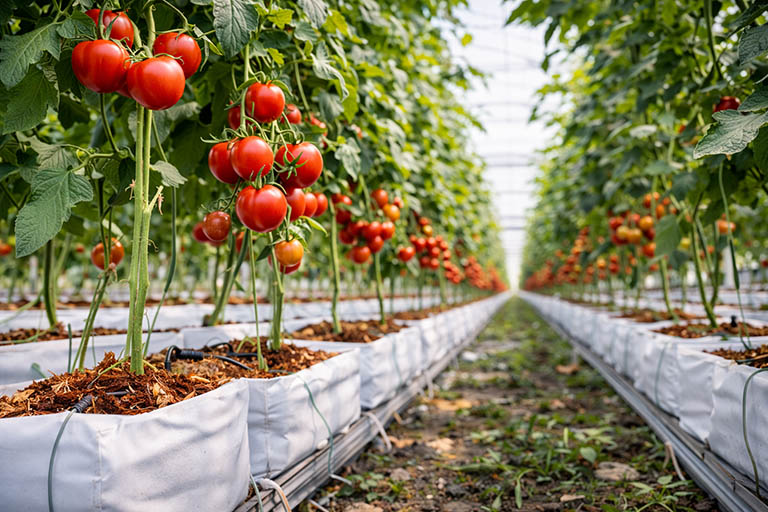
Coco peat grow bags for tomato growers in New York are becoming a strategic input rather than just a growing medium. In a state where greenhouse tomato production continues expanding due to seasonal climate limits, substrate performance directly influences profitability.
New York growers operate under unique conditions. Winters are harsh. Heating costs are high. Crop cycles must be efficient. According to agricultural production data available through the United States Department of Agriculture crop statistics portal, controlled environment vegetable production in northeastern states continues to grow due to supply chain demand and regional sourcing initiatives.
In that context, root zone stability becomes central to yield consistency.
And coco peat offers measurable advantages.
Why Coco Peat Grow Bags for Tomato Growers in New York Improve Cold Season Root Stability
Cold season greenhouse production creates specific stress conditions. Root zones can cool rapidly, slowing nutrient uptake and vegetative growth.
Coco peat retains moisture while preserving air filled porosity. The fibrous composition of natural coconut coir growing medium maintains balanced water distribution without suffocating roots.
In cooler climates like New York, oxygen availability within the root zone is essential for maintaining metabolic activity. Substrate that compacts under repeated irrigation reduces that oxygen flow.
One New York tomato producer shared with us,
“I used this as like this during our winter tomato cycle. Root systems remained active even when outside temperatures dropped significantly. Plant vigor held steady.”
Maintaining vigor during winter months protects early fruit set and cluster uniformity.
Water Management Under Variable Climate Conditions
New York greenhouse operations often shift between winter heating mode and summer ventilation mode. Irrigation programs must adapt to seasonal transitions.
Coco peat grow bags distribute moisture evenly across the substrate profile. This reduces plant to plant variability in hydration levels.
When moisture distribution remains uniform:
1 Calcium mobility improves
2 Blossom end rot risk decreases
3 Fruit sizing becomes consistent
4 Fertigation calculations stay accurate
Stable irrigation performance reduces emergency adjustments during peak harvest periods.
And that reduces operational stress.
Electrical Conductivity Control for Long Tomato Cycles
Tomato production cycles in New York can extend for many months inside heated greenhouses. During extended cycles, salt buildup becomes a common challenge.
Improperly processed substrate may introduce excess sodium or chloride, complicating nutrient management.
High quality substrate supplied by manufacturers such as Coco Labs coconut coir grow bag manufacturer undergoes washing and buffering before export. This reduces unwanted salts and stabilizes starting electrical conductivity.
Our customers are really happy with our grow bags and they said like this,
“EC stability lasted longer into the cycle. We made fewer corrective flushes compared to our previous substrate.”
Fewer flushes mean less nutrient waste and lower water consumption.
In a region where water and heating both carry cost implications, efficiency compounds quickly.
Structural Durability in High Wire Tomato Systems
New York greenhouse growers increasingly adopt high wire tomato systems to maximize vertical space and yield per square meter.
High density planting places pressure on substrate structure. Over time, some growing media compress and reduce pore space.
Coco peat contains natural lignin compounds that slow decomposition. This preserves air channels throughout the production cycle.
Maintained pore space supports:
1. Continuous root respiration
2. Stable nutrient absorption
3. Reduced compaction stress
4. Improved late season fruit consistency
Late season yield stability often determines overall profitability.
Disease Pressure and Root Health
Although New York is cooler than Florida, greenhouse humidity still creates risk for root related diseases. Anaerobic zones inside compacted substrate promote harmful microbial activity.
Balanced drainage and aeration reduce these stress conditions.
Research supported by the Coconut Research Institute Sri Lanka agricultural research authority continues validating coconut based substrates for horticultural systems in diverse climates.
Healthy root systems respond better to environmental stress and temperature shifts.
You know what. In greenhouse farming, prevention usually costs less than correction.
Sustainability and Regional Market Demand
New York consumers increasingly value locally grown produce. Greenhouse tomato production supports year round availability.
Coco peat is derived from renewable coconut husk, making it a more sustainable alternative to certain mineral based media.
Retailers evaluating environmental sourcing appreciate renewable substrate inputs.
Sustainability reporting strengthens long term supply agreements.
And long term agreements stabilize revenue.
Integration With Modern Greenhouse Systems
New York greenhouse operations often integrate advanced climate control systems, automated fertigation, and digital monitoring.
Coco peat grow bags integrate seamlessly with:
– Drip irrigation systems
– Recirculating nutrient programs
– EC and pH monitoring systems
– High density row layouts
Proper preparation before transplanting remains essential.
A detailed preparation guide is available here
Step by step guide to using coco coir grow bags
Uniform hydration at the start prevents uneven root expansion later.
And uneven roots create uneven plants.
Frequently Asked Questions
Why are New York greenhouse tomato growers choosing coco peat grow bags
Because they provide balanced moisture retention, improved oxygen availability, and stable electrical conductivity in both winter and summer greenhouse cycles.
Does coco peat perform well in cold climate greenhouses
Yes. Its balanced water and air retention supports root activity even during cooler temperature periods.
Can coco peat reduce blossom end rot in tomatoes
Indirectly yes. Stable moisture distribution supports consistent calcium uptake, which helps reduce blossom end rot risk.
How long do coco peat grow bags last in tomato production
Typically one full production cycle, with structural integrity maintained throughout extended harvest periods.
Is coco peat environmentally sustainable for commercial farming
Yes. It is derived from renewable coconut husk and supported by agricultural research institutions focused on sustainable growing systems.